
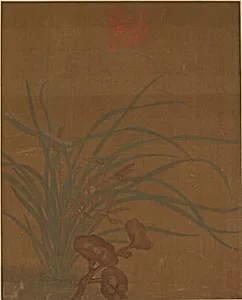
Eight designs of flowers
Classification
Painting
Department
Smithsonian Collection
Museum
Smithsonian American Art Museum
Credit
Gift of Charles Lang Freer
Accession Number
F1911.157a-h
Rights
Public Domain
Tags
About this artwork
To 1911
Art Historical Context
**Eight Designs of Flowers** This set of eight flower designs, once attributed to the Five Dynasties artist Huang Jucai (active 933–after 993), dates to China's Ming dynasty (13681644). Though the attribution has since been questioned, the work exemplifies the refined bird-and-flower painting tradition that flourished during the Ming era, a golden age for Chinese art under imperial patronage. Likely rendered in ink and color on silk or paper—common for such designs—these compositions feature symbolic motifs like the chrysanthemum (autumn resilience), lotus (purity), narcissus (self-cultivation), orchid (erudition), peony (prosperity), and fungus-of-immortality (longevity), alongside a frog, evoking harmony in nature. In Chinese culture, flowers held profound meanings tied to Confucian virtues, seasons, and Daoist immortality ideals, making these designs not just decorative but philosophical. Collected by the visionary industrialist Charles Lang Freer, who gifted it to the Smithsonian American Art Museum before 1911, the piece reflects early 20th-century enthusiasm for Asian art in America. Its precise, elegant style highlights Ming artists' mastery of delicate brushwork, inviting viewers to ponder nature's enduring lessons. A serene window into imperial elegance! (198 words)