
Narcissus
Unknown Artist
13th century
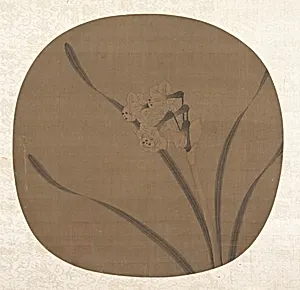
Medium
Fan mounted as an album leaf; ink and color on silk
Dimensions
9 3/8 x 9 3/5 in. (23.8 x 24.4 cm)
Classification
Paintings
Culture & Period
China · Southern Song dynasty (1127–1279)
Department
Asian Art
Museum
Metropolitan Museum of Art, New York, NY
Credit
John Stewart Kennedy Fund, 1913
Accession Number
13.100.112
Rights
Public Domain
Tags
Art Historical Context
In the refined world of Southern Song dynasty (11271279) art, this exquisite painting of *Narcissus*, created by an unknown artist in the 13th century, captures the era's poetic elegance. Originally a fan leaf remounted as an album page, it measures a intimate 9 3/8 x 9 3/5 inches (23.8 x 24.4 cm) and is rendered in ink and color on silk—a luxurious medium prized for its smooth surface that allowed delicate washes and precise lines. Acquired through the John Stewart Kennedy Fund 1913, it resides in the Metropolitan Museum of Art's Asian Art collection. Southern Song paintings often emphasized subtle naturalism and scholarly restraint, reflecting the court's displacement southward after the Jurchen invasions. Narcissus, with its crisp white blooms and slender leaves emerging from water, embodies purity and renewal in Chinese culture, frequently symbolizing the arrival of spring and good fortune. The artist's masterful ink techniques—fine brushstrokes for petals and textured washes for foliage—highlight the period's bird-and-flower genre, where everyday beauty conveyed deeper harmony with nature. This work invites viewers to appreciate the Southern Song's introspective aesthetic: small-scale yet profound, bridging imperial patronage and emerging literati tastes. A timeless bloom frozen in silk, it whispers of resilience amid dynastic change.