
Enamel from a Reliquary
early 13th century
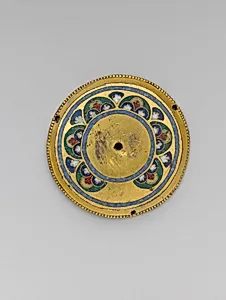
Medium
Champlevé & cloisonné enamel, copper-gilt
Dimensions
Overall: 3 1/8 x 5/16 in. (8 x 0.8 cm)
Classification
Enamels-Champlevé & Cloisonné
Culture
German
Department
The Cloisters
Museum
Metropolitan Museum of Art, New York, NY
Credit
Purchase, Gift of The Hearst Foundation and Rogers Fund, by exchange, 2008
Accession Number
2008.347
Rights
Public Domain
Tags
Art Historical Context
This exquisite enamel panel, crafted by the Master of the Mary's Reliquary C in early 13th-century Germany, once adorned a reliquary—a sacred container for holy relics venerated in medieval Christian devotion. Measuring just 3 1/8 x 5/16 inches, its diminutive size belies its spiritual grandeur, likely depicting a holy figure or scene to inspire awe and piety among pilgrims and worshippers. The artist masterfully combined champlevé and cloisonné enameling techniques on a copper-gilt base. Champlevé involved carving troughs into the metal and filling them with molten glass-like enamel, fired to a brilliant sheen, while cloisonné used thin gold wires to form cells for the colored vitreous pastes. These methods, peaking in the Mosan region of Germany and the Rhineland, produced jewel-like luminosity and durability, making enamels prized for liturgical objects. Housed in The Cloisters at the Metropolitan Museum of Art, this fragment exemplifies the technical virtuosity and religious fervor of High Gothic art. Acquired in 2008 through generous gifts, it offers a window into medieval craftsmanship, where artistry served faith, transforming humble metal into eternal reverence.