
Enchu tsuki
1886-02
Medium
color woodcut
Dimensions
356; 242
Rights
Public Domain
About this artwork
height 356 mm x width 242 mm
Art Historical Context
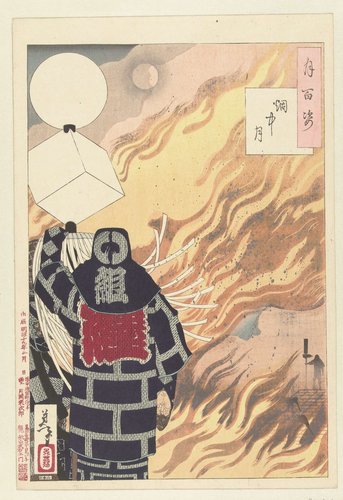
**Enchū Tsuki by Tsukioka Yoshitoshi (1886)** Step into the luminous world of late 19th-century Japan with *Enchū Tsuki* ("Moon of the Hermitage"), a striking color woodcut by Tsukioka Yoshitoshi, one of the final masters of ukiyo-e. Created in February 1886 during the Meiji era, this print measures 356 mm high by 242 mm wide—compact yet captivating, perfect for intimate contemplation. Yoshitoshi (1839–1892), often called the "last great ukiyo-e artist," blended traditional woodblock techniques with bold, dramatic compositions, bridging Edo-period aesthetics and modern influences. This work hails from Yoshitoshi's renowned series *One Hundred Aspects of the Moon* (Tsuki Hyakushi), which poetically explores humanity's relationship with the lunar orb across history and legend. The title evokes a hermit's secluded moon-viewing, symbolizing Japan's deep cultural reverence for the moon as a motif of impermanence, beauty, and seasonal change—especially poignant in tsukimi traditions. Yoshitoshi's style shines through in his intricate lines, vivid colors, and emotional depth, often infusing supernatural or historical scenes with psychological intensity. The color woodcut medium itself is a marvel of collaborative craftsmanship: carvers, printers, and publishers layered pigments onto cherry wood blocks for stunning vibrancy and precision. As photography emerged, Yoshitoshi's prints preserved ukiyo-e's legacy, offering museum visitors a window into Japan's artistic golden age. Gaze upon it and feel the quiet poetry of the night sky. (218 words)
About the Artist
Tsukioka Yoshitoshi · 1839–1892
Tsukioka Yoshitoshi was born on April 30, 1839, in the Shimbashi district of Edo, the city that would become Tokyo. At the age of eleven he was apprenticed to Utagawa Kuniyoshi, one of the great masters of the Japanese woodblock print, who gave the boy the artist name 'Yoshitoshi' as a mark of lineage within the Utagawa School. From Kuniyoshi, Yoshitoshi absorbed the full tradition of ukiyo-e — th...