
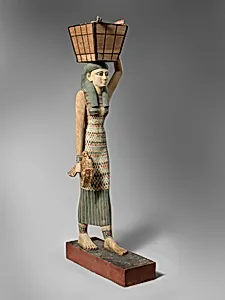
Estate Figure
Unknown Artist
ca. 1981–1975 B.C.
Medium
Wood, gesso, paint
Dimensions
H. 112 cm (44 1/8 in.); W. 17 cm (6 11/16 in.); D. 46.7 cm (18 3/8 in.)
Classification
Statue, standing woman, offering
Period
Middle Kingdom
Department
Egyptian Art
Museum
Metropolitan Museum of Art, New York, NY
Credit
Rogers Fund and Edward S. Harkness Gift, 1920
Accession Number
20.3.7
Rights
Public Domain
Tags
Art Historical Context
Step into ancient Egypt's Middle Kingdom with this captivating *Estate Figure*, a wooden dating to ca. 1981–1975 B.C. from Dynasty 12. Likely part of the renowned Meketre models discovered in the tomb of Meketre, a high-ranking official at Thebes, it portrays a striding female servant—possibly bearing ducks as offerings from the estate. These tomb figurines vividly recreated daily life, ensuring the deceased's eternal sustenance through symbolic provisions like fowl, grain, and livestock. Crafted from wood, coated in gesso for a smooth surface, and vividly painted, the figure stands an impressive 112 cm tall, with a slender 17 cm width and 46.7 cm depth. This technique highlights Egyptian artisans' mastery in modeling realistic human forms and attire, from the servant's simple sheath dress to dynamic posture, blending functionality with artistry for funerary magic. Housed in the Metropolitan Museum of Art's Egyptian Art department (Rogers Fund and Edward S. Harkness Gift, 1920), this piece reveals the era's cultural emphasis on *ka*—the life force—requiring ongoing nourishment in the afterlife. It offers a window into social roles, agricultural wealth, and the optimism of Dynasty 12 prosperity.