
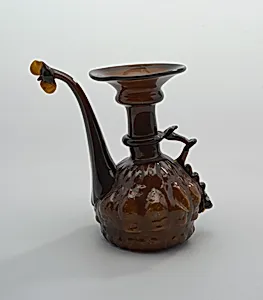
Ewer
17th–18th century
Classification
glasswares
Department
Smithsonian Collection
Museum
Smithsonian American Art Museum
Credit
Gift of Rodman Wanamaker
Accession Number
1919-24-85
Rights
Public Domain
About this artwork
Research in Progress
Art Historical Context
This elegant ewer, dating to the 17th or 18th century, the artistry of early glassmaking traditions. As a pitcher-like vessel typically used for pouring liquids such as water or wine during dining or ablutions, it reflects the period's blend of functionality and ornamentation. Glasswares from this era were prized possessions, often crafted by skilled artisans using techniques like free-blowing and molding to achieve graceful forms and subtle translucency. Though the specific medium details and artist remain under research, its classification as glassware highlights the technical innovations of the time, when European influences shaped colonial American production. Such objects served as status symbols in households, showcasing transparency and luster that rivaled silver. A generous gift from Rodman Wanamaker, a prominent Philadelphia collector and philanthropist, this ewer entered the Smithsonian American Art Museum's collection, enriching our understanding of everyday luxury in early modern life. Ongoing research promises to reveal more about its origins and craftsmanship.
About the Artist
Unknown
The artist designated as "Unknown" in our virtual museum's collection exemplifies a poignant chapter in art history: creators whose identities have faded into obscurity despite the enduring power of their work. With only one known artwork attributed to them in our holdings, this figure represents countless anonymous hands that shaped visual culture across centuries. Museums worldwide, including th...