
Figure
Unknown Artist
10th–12th century
Medium
Ivory; carved and incised
Dimensions
H. 7 1/2 in. (19.1 cm) Gr. W. 2 3/8 in. (6 cm) Gr. Diam. 2 in. (5.1 cm)
Classification
Ivories and Bone
Department
Islamic Art
Museum
Metropolitan Museum of Art, New York, NY
Credit
Fletcher Fund, 1965
Accession Number
65.52.2
Rights
Public Domain
Tags
Art Historical Context
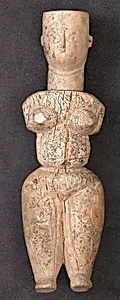
This exquisite ivory figure, carved by an unknown artist between the 10th and 12th centuries, stands as a testament to the refined artistry of the Islamic world. Measuring just 7½ inches tall, its compact form—likely depicting a human or symbolic subject—showcases the mastery of sculptors in regions like Egypt or the Near East during the Fatimid and early Seljuk eras. Housed in the Metropolitan Museum of Art's Islamic department, it was acquired through the Fletcher Fund in 5 and exemplifies the luxury of ivories and bone carvings prized in medieval Islamic courts. Ivory, sourced from elephant tusks or other mammals, was a prestigious medium valued for its smooth texture and ability to hold intricate details. Here, the artist employed carving to shape the basic form and incising to add fine lines, patterns, or facial features, creating depth and texture in a miniature scale. Such techniques allowed for portable, personal objects—perhaps devotional, amuletic, or decorative—that bridged religious and secular life. Though the exact subject remains mysterious, this sculpture highlights the cultural importance of figural representation in Islamic art, where artisans blended realism with stylized elegance. Visitors will appreciate its tactile allure and the enduring skill it reveals from a golden age of craftsmanship.