
Bassoon
ca. 1825–50
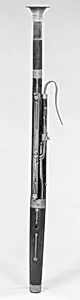
Medium
Maple, brass
Dimensions
Length: 130 cm Bell diameter: 11.2 cm
Classification
Aerophone-Reed Vibrated-double reed
Culture
Austrian
Department
Musical Instruments
Museum
Metropolitan Museum of Art, New York, NY
Credit
Gift of Helen C. Lanier, 1982
Accession Number
1982.100.1
Rights
Public Domain
Art Historical Context
Step into the enchanting world of 19th-century music with this exquisite bassoon, crafted by the skilled Austrian maker Johann Ziegler around 1825–50. Housed in The Metropolitan Museum Art's Department of Musical Instruments, this double-reed aerophone exemplifies the refined instrument-making traditions of Vienna, a hub of musical innovation during the Romantic era. Gifted by Helen C. Lanier 1982, it stands as a testament to the that powered the orchestras of Beethoven, Schubert, and their contemporaries. Fashioned from resonant maple wood with gleaming brass fittings, the bassoon measures an impressive 130 cm in length, culminating in a bell diameter of 11.2 cm. Maple's fine grain and stability made it ideal for woodwinds, allowing for precise boring and tonal warmth, while brass keys enhanced playability amid evolving keywork designs of the period. This instrument's double-reed mechanism produces its signature deep, reedy timbre, essential for orchestral bass lines and haunting solos. Ziegler's bassoon captures a pivotal moment when woodwind instruments transitioned toward greater expressiveness and technical virtuosity, bridging Classical precision with Romantic depth. Visitors, imagine its somber tones echoing through imperial concert halls— a harmonious blend of artistry and engineering.