
Flask
1st–3rd century
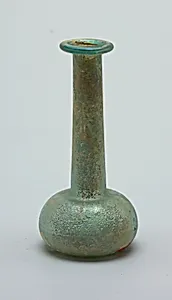
Medium
glasswares
Classification
glasswares
Department
Smithsonian Collection
Museum
Smithsonian American Art Museum
Credit
Gift of Mrs. Leo Wallerstein
Accession Number
1961-88-6
Rights
Public Domain
About this artwork
Research in Progress
Art Historical Context
This elegant glass flask, dating to the 1st–3rd century CE, from the height of the Roman Empire, when glassmaking reached extraordinary heights of innovation. Produced by an unknown artisan, belongs to a class of everyday vessels that highlight the era's technical prowess and widespread trade networks spanning the Mediterranean. The medium—free-blown glass—revolutionized production around the 1st century, enabling artisans to create thin-walled, lightweight forms quickly and affordably. Flasks like this one were essential for practical uses, such as holding perfumes, oils, medicines, or even ink, blending utility with subtle artistry in their smooth curves and transparency. Housed in the Smithsonian American Art Museum's Smithsonian Collection through the generous gift of Mrs. Leo Wallerstein, this piece awaits further research. It offers a tangible glimpse into ancient daily life, reminding us how ordinary objects can encapsulate a civilization's ingenuity and cultural vibrancy.
About the Artist
Unknown
The artist designated as "Unknown" in our virtual museum's collection exemplifies a poignant chapter in art history: creators whose identities have faded into obscurity despite the enduring power of their work. With only one known artwork attributed to them in our holdings, this figure represents countless anonymous hands that shaped visual culture across centuries. Museums worldwide, including th...