
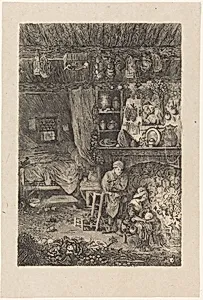
Flemish Interior
1876/1880
Medium
etching
Classification
Department
CG-E
Museum
National Gallery of Art, Washington, D.C.
Credit
Rosenwald Collection
Accession Number
1950.16.14
Rights
Public Domain
Art Historical Context
Rodolphe Bresdin’s *Flemish Interior* (1876/1880) captures the quiet intimacy of a domestic scene through the precise medium of etching. Bresdin, a French printmaker celebrated for his meticulous draftsmanship, drew inspiration from seventeenth-century Flemish and Dutch genre paintings, translating their attention to everyday life into a late-nineteenth-century context. The etching technique—where acid bites fine lines into a metal plate—allowed him to render textures of fabric, wood, and light with remarkable clarity, inviting viewers to linger over the smallest details of the room. Created during a period when many artists turned toward modern subjects, Bresdin’s choice of an older interior reflects a deliberate dialogue with art history. His prints often blend observation with imagination, offering a nostalgic yet fresh interpretation of domestic space. Now part of the National Gallery of Art’s Rosenwald Collection, the work exemplifies how etching served as both a reproductive and expressive medium, preserving intricate visions for generations of museum visitors to explore.
About the Artist
Rodolphe Bresdin · 1822–1885
Rodolphe Bresdin (1822–1885) was a visionary French draughtsman, engraver, and lithographer whose fantastical imagery captured the empathy of rural poverty and the wild exuberance of the imagination. Born on August 12, 1822, in Montrelais near Le Fresne-sur-Loire in Brittany, he grew up in the Breton countryside amid its bardic folklore traditions before a family dispute left him homeless in Paris...