
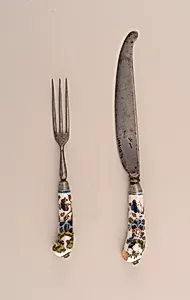
Fork and Knife with Glazed Earthenware Handles
Medium
cutlery
Classification
cutlery
Department
Smithsonian Collection
Museum
Smithsonian American Art Museum
Credit
Gift of Leverton Harris
Accession Number
1913-13-7-a,b
Rights
Public Domain
About this artwork
Research in Progress
Art Historical Context
Step into the elegant world of 18th-century European dining with this exquisite *Fork and Knife with Glazed Earthenware Handles*, crafted by the renowned Meissen Porcelain Manactory in Saxony, Germany. Founded in1710, Meissen was Europe's pioneering porcelain factory, unlocking the long-guarded Chinese secret of true hard-paste porcelain. By the mid-18th century, during the lavish Rococo era, the manufactory excelled in producing opulent tableware that blended functionality with artistry, adorning the tables of nobility and royalty. These cutlery pieces exemplify Meissen's mastery in combining glazed earthenware handles—smooth, durable, and vibrantly finished—with finely wrought metal blades. The handles' glossy glaze not only enhanced their aesthetic appeal but also showcased advanced ceramic techniques, like precise molding and high-temperature firing, which ensured both beauty and practicality for daily use among the elite. This fusion of materials highlighted the period's obsession with luxury and refinement, turning everyday utensils into status symbols. A generous gift from Leverton Harris to the Smithsonian American Art Museum, this set invites us to ponder the cultural splendor of Saxony's porcelain heritage. Though research continues, it stands as a tangible link to an age when innovation in crafts elevated the art of living. (198 words)