
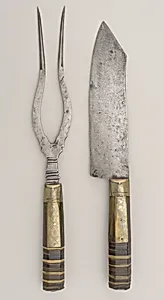
Fork
17th century
Classification
cutlery
Department
Smithsonian Collection
Museum
Smithsonian American Art Museum
Credit
The Robert L. Metzenberg Collection, gift of Eleanor L. Metzenberg
Accession Number
1985-103-10
Rights
Public Domain
About this artwork
Research in Progress
Art Historical Context
### 17th-Century Fork This elegant 17th-century fork, part of the Smithsonian American Art's collection, exemplifies everyday objects elevated to art through their craftsmanship and historical resonance. Donated from The Robert L. Metzen Collection by Eleanor L. Metzenberg, it falls under the classification of cutlery, highlighting how utilitarian items from colonial America captured the ingenuity of early artisans. Though research is ongoing, its presence in the Smithsonian underscores the museum's commitment to preserving artifacts that reveal daily life in the New World. In the 17th century, forks were a novelty transitioning from European luxury to practical tools in American households. Introduced via trade routes from Italy and England, they symbolized refined dining amid the colonies' growing prosperity. Crafted during a time of exploration and settlement, such pieces often featured simple yet durable designs suited to frontier living, blending functionality with subtle decorative flair. As a window into colonial material culture, this fork invites us to ponder the evolution of table manners and social customs. Displayed alongside other Smithsonian treasures, it reminds visitors that art thrives not just in canvases, but in the silverware that shaped intimate moments of history. (198 words)
About the Artist
Unknown
The artist designated as "Unknown" in our virtual museum's collection exemplifies a poignant chapter in art history: creators whose identities have faded into obscurity despite the enduring power of their work. With only one known artwork attributed to them in our holdings, this figure represents countless anonymous hands that shaped visual culture across centuries. Museums worldwide, including th...