
Fork
early 17th century
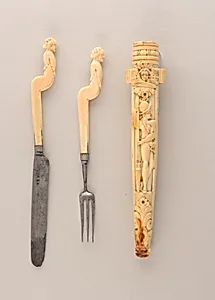
Medium
cutlery
Classification
cutlery
Department
Smithsonian Collection
Museum
Smithsonian American Art Museum
Credit
The Robert L. Metzenberg Collection, gift of Eleanor L. Metzenberg
Accession Number
1985-103-149-c
Rights
Public Domain
About this artwork
Research in Progress
Art Historical Context
Nestled in the Smithsonian American Art Museum's collection, this early 17th-century fork from the Robert L. Metzenberg Collection—generously gifted by Eleanor L. Metzenberg—offers a glimpse into the everyday artistry of a transformative era. As cutlery, it embodies the craftsmanship of colonial or European metalworkers, when functional objects began blending utility with subtle elegance. Research into its precise origins is ongoing, inviting us to appreciate its quiet historical presence. In the early 1600s, forks were still emerging from novelty to necessity in Western dining culture. Originating from Byzantine and Italian influences, they symbolized refined table manners amid the Renaissance's emphasis on civility and hygiene. This piece likely reflects that shift, transitioning from hands and knives to personal utensils, especially in affluent households across Europe and the burgeoning American colonies. Today, its classification as art underscores how museums elevate humble tools, revealing cultural stories through form and function. A testament to meticulous preservation, it reminds visitors that history hides in the silverware drawer.
About the Artist
Unknown
The artist designated as "Unknown" in our virtual museum's collection exemplifies a poignant chapter in art history: creators whose identities have faded into obscurity despite the enduring power of their work. With only one known artwork attributed to them in our holdings, this figure represents countless anonymous hands that shaped visual culture across centuries. Museums worldwide, including th...