
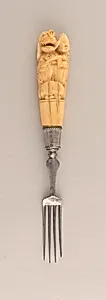
Fork
ca. 1690
Classification
cutlery
Department
Smithsonian Collection
Museum
Smithsonian American Art Museum
Credit
The Robert L. Metzenberg Collection, gift of Eleanor L. Metzenberg
Accession Number
1985-103-157
Rights
Public Domain
About this artwork
Research in Progress
Art Historical Context
Step into the elegant world of 17th-century tableware with *Fork* by Herder, crafted around 1690. This delicate piece of cutlery, now housed in the Smithsonian American Museum as part of the Smithsonian Collection, hails from The Robert L. Metzenberg Collection, generously gifted by Eleanor L.zenberg. Though research is ongoing and the medium remains unidentified, its classification as cutlery highlights the refined craftsmanship of the era, when everyday objects like forks were elevated to functional art. In the late 1600s, forks were still a novelty in many households, transitioning from Italian aristocratic tables to broader European and colonial American use. By 1690, they symbolized emerging standards of dining etiquette and social status, especially in prosperous settings. Makers like Herder—likely a skilled artisan—contributed to this shift, producing items that blended utility with subtle ornamentation, reflecting the period's growing appreciation for polished domestic goods. As a snapshot of early modern material culture, this fork invites us to ponder the artistry in the mundane. Its presence in the Smithsonian underscores how cutlery evolved from rarity to ritual, bridging history and hospitality in American decorative arts. (198 words)