
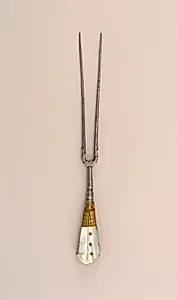
Fork
ca. 1690
Classification
cutlery
Department
Smithsonian Collection
Museum
Smithsonian American Art Museum
Credit
The Robert L. Metzenberg Collection, gift of Eleanor L. Metzenberg
Accession Number
1985-103-96
Rights
Public Domain
About this artwork
Research in Progress
Art Historical Context
Step into the intimate world of 17th-century American domestic life with this elegant *Fork*, dating to around 1690. Housed in the Smithsonian American Art Museum's collection, this piece of cutlery offers a glimpse into the everyday rituals of early colonial households. At a time when European settlers were establishing table manners influenced by Old World customs, forks were emerging as refined dining tools, symbolizing growing sophistication amid the rigors of frontier living. Though the artist and medium remain under research, its classification as cutlery highlights the craftsmanship of the era, likely fashioned by skilled silversmiths or metalworkers in burgeoning American workshops. Forks like this one were not mere utensils but markers of social aspiration—rarer than knives or spoons, they signified status and the blending of practical utility with emerging etiquette. Generously gifted through The Robert L. Metzenberg Collection by Eleanor L. Metzenberg, this artifact invites us to ponder the hands that once held it: perhaps a merchant's family in New England or the Mid-Atlantic colonies. As research progresses, it continues to enrich our understanding of America's material culture, bridging the gap between utility and artistry in the late 1600s.
About the Artist
Unknown
The artist designated as "Unknown" in our virtual museum's collection exemplifies a poignant chapter in art history: creators whose identities have faded into obscurity despite the enduring power of their work. With only one known artwork attributed to them in our holdings, this figure represents countless anonymous hands that shaped visual culture across centuries. Museums worldwide, including th...