
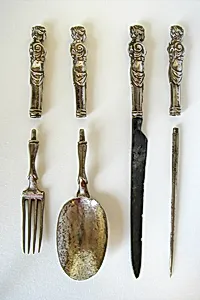
fork tines
late 17th century
Classification
cutlery
Department
Smithsonian Collection
Museum
Smithsonian American Art Museum
Credit
The Robert L. Metzenberg Collection, gift of Eleanor L. Metzenberg
Accession Number
1985-103-254-d
Rights
Public Domain
About this artwork
Research in Progress
Art Historical Context
Welcome to the Smithsonian American Art, where everyday objects like "Fork Tines" from the late 17th century reveal glimpses into colonial life. This intriguing fragment, classified as cutlery, hails from The Robert L. Metzen Collection, generously gifted by Eleanor L.zenberg. Though the artist and exact medium remain unknown, its presence in an art museum highlights how functional items from America's early history carry artistic and cultural weight. In the late 1600s, forks were still a novelty in the American colonies, transitioning from elite European tableware to practical tools. Often crafted from silver or iron, these tines—likely the pronged ends of a fork—speak to the craftsmanship of the era, when households balanced utility with emerging refinement. As research continues on this piece, it invites us to ponder the daily rituals of early settlers. Displayed among fine arts, "Fork Tines" underscores the museum's commitment to preserving humble artifacts that shaped American identity. Next time you dine, consider how such simple designs evolved into modern essentials! (178 words)
About the Artist
Unknown
The artist designated as "Unknown" in our virtual museum's collection exemplifies a poignant chapter in art history: creators whose identities have faded into obscurity despite the enduring power of their work. With only one known artwork attributed to them in our holdings, this figure represents countless anonymous hands that shaped visual culture across centuries. Museums worldwide, including th...