
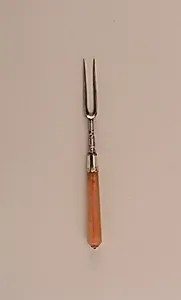
Fork with Eight-Paneled Agate Handle
late 17th century
Classification
cutlery
Department
Smithsonian Collection
Museum
Smithsonian American Art Museum
Credit
Gift of Mrs. Francis B. Lothrop, Mrs. George Batchelder, and Gordon Abbott, Sr.
Accession Number
1957-29-4-e
Rights
Public Domain
About this artwork
Research in Progress
Art Historical Context
Step into the opulent world of late 17th-century London dining with this exquisite *Fork with Eight-Paneled Agate Handle*, crafted by William Boswell, a skilled artisan active in the city during that era. Dating to the late 1600s, this piece of cutlery reflects the growing sophistication of English tableware amid the Restoration period, when forks transitioned from continental novelties to symbols of refined taste among the elite. The fork's standout feature is its handle, meticulously crafted from agate—a semi-precious stone prized for its durability and attractive banding—shaped into eight distinct panels. This faceted design showcases exceptional lapidary work, blending natural material with precise cutting techniques to create a luxurious, ergonomic grip that catches the light beautifully. While the metal components remain under study, the overall form exemplifies the high craftsmanship of London makers like Boswell, who catered to wealthy patrons. Housed in the Smithsonian American Art Museum through a generous gift from Mrs. Francis B. Lothrop, Mrs. George Batchelder, and Gordon Abbott, Sr., this fork offers a tangible glimpse into everyday luxury. In an age when forks were still a fashionable rarity, it highlights cultural exchanges with Europe and the rising status of personal silverware in British households. (198 words)