
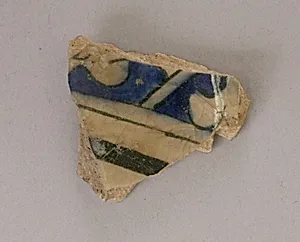
Fragment
Unknown Artist
14th century
Medium
Stonepaste; white slip; blue and black underglaze; transparent, colorless glaze
Classification
Ceramics
Department
Islamic Art
Museum
Metropolitan Museum of Art, New York, NY
Credit
Rogers Fund, 1907
Accession Number
07.238.56
Rights
Public Domain
Art Historical Context
This enigmatic *Fragment* from the th century offers a glimpse into the masterful world of Islamic ceramics, crafted by an unknown artist using innovative stonepaste—a composite material of quartz, clay, and frit that mimicked the prized porcelain of China. Housed in the Metropolitan Museum of Art's Islamic Art (acquired via the Rogers Fund in 1907), this piece exemplifies the technical prowess of medieval potters in regions like Iran or Syria, where stonepaste bodies allowed for finer, more translucent results than traditional clay. The artwork's decoration features white slip as a base, with intricate blue and black underglaze motifs fired beneath a transparent, colorless glaze. This underglaze technique, perfected in the Islamic world during the 13th–14th centuries, ensured vibrant, durable colors that resisted wear—ideal for everyday vessels or architectural tiles. Such fragments often survive from larger objects like dishes or mihrabs, hinting at the opulent designs of scrolling florals, calligraphy, or geometric patterns that symbolized paradise gardens in Islamic culture. Though incomplete, this shard whispers of a golden age of artistic exchange along the Silk Road, blending Persian ingenuity with influences from China and beyond. A testament to enduring craftsmanship, it invites us to ponder the hands that shaped it centuries ago.