
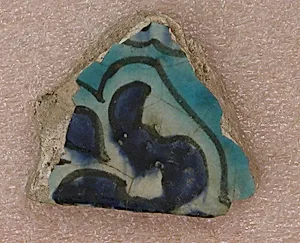
Tile Fragment
Unknown Artist
1334–1434
Medium
Stonepaste; polychrome painted under transparent glaze
Classification
Ceramics-Tiles
Department
Islamic Art
Museum
Metropolitan Museum of Art, New York, NY
Credit
Rogers Fund, 1945
Accession Number
45.103.16
Rights
Public Domain
Art Historical Context
This exquisite tile fragment, dating to the 14 century (1334–4), hails from the Islamic world, likely Iran or a neighboring region during the post-Mongol era. Crafted by an unknown artist, it showcases the ingenuity of medieval Islamic potters in the medium of stonepaste—a composite of quartz, clay, and frit that mimics porcelain's translucency while being more durable for architectural use. Acquired through the Rogers Fund in 1945, it now graces the Metropolitan Museum of Art's Islamic Art department. The tile's technique—polychrome painting under a transparent glaze—is a hallmark of this period's ceramic innovation. Pigments were applied directly onto the unfired body and sealed beneath a clear, lustrous glaze, ensuring vibrant colors endured for centuries. Such tiles adorned mosques, madrasas, and palaces, transforming interiors with intricate patterns that symbolized paradise gardens or geometric abstractions rooted in Islamic aniconism. As a fragment, it invites us to imagine its original splendor amid grand ensembles, highlighting how ceramics bridged art and architecture in Islamic culture. This piece underscores the era's technical mastery and aesthetic refinement, offering a tangible link to a vibrant, spiritually rich world.