
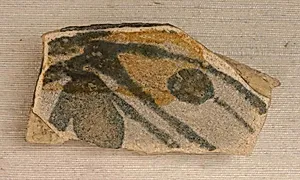
Fragment
Unknown Artist
9th–10th century
Medium
Earthenware; splash glazed decoration
Classification
Ceramics
Department
Islamic Art
Museum
Metropolitan Museum of Art, New York, NY
Credit
Gift of Mr. and Mrs. Wendell M. Hastings, 1960
Accession Number
60.23.41
Rights
Public Domain
Art Historical Context
This exquisite earthenware fragment, dating to the 9th–10th century, offers a glimpse into the vibrant of early Islamic ceramics. Produced during the Abbasid Caliphate, a golden age of artistic innovation in the Islamic world, it exemplifies the technical prowess of anonymous potters who transformed everyday vessels into colorful masterpieces. Housed in the Metropolitan Museum of Art's of Islamic Art, this piece was generously gifted by Mr. and Mrs. Wendell. Hastings in 196. The fragment's standout feature is its splash-glazed decoration, a pioneering technique where contrasting slips of clay—often white, yellow, green, and brown—were splashed onto the unfired earthenware body before a transparent glaze was applied and fired. This created dynamic, abstract patterns resembling splashing liquids or cosmic bursts, predating the more controlled lusterware that would later define Islamic pottery. Such methods highlighted the potters' mastery of kilns and glazes, turning humble earthenware into durable, eye-catching objects for tableware, tiles, or storage. Though just a fragment, it whispers of bustling workshops in regions like Iraq or Iran, where ceramics bridged utility and beauty, influencing global traditions. Visitors, imagine sipping from a bowl alive with such splashes— a testament to Islam's early contributions to decorative arts!