
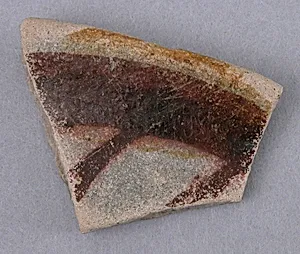
Fragment
Unknown Artist
9th century
Medium
Earthenware; splash glazed
Classification
Ceramics
Department
Islamic Art
Museum
Metropolitan Museum of Art, New York, NY
Credit
Gift of Mr. and Mrs. Wendell M. Hastings, 1960
Accession Number
60.23.47
Rights
Public Domain
Art Historical Context
This exquisite *Fragment* from the th century exemplifies early Islamic ceramic artistry, hailing from the vibrant workshops of the Abbasid era. As a piece of earthenware adorned with splash glazing, it a pivotal moment in the evolution of pottery in the Islamic world, where potters experimented with bold, colorful techniques to decorate everyday vessels like bowls and tiles. Though only a fragment survives, its presence evokes the bustling markets and refined tastes of medieval Baghdad or Basra, centers of cultural exchange along Silk Road trade routes. The splash glazing technique—where slips of colored clay or glaze are artfully "splashed" onto the unfired earthenware body before a final transparent glaze—is both innovative and playful. This method created dynamic, abstract patterns in turquoise, cobalt, and manganese hues, predating the more controlled lusterware that would later define Islamic ceramics. Its simplicity belies its significance: it democratized decoration, making beauty accessible beyond elite metalwork. Today, this fragile survivor graces the Metropolitan Museum of Art's Islamic Art department, a generous gift from Mr. and Mrs. Wendell M. Hastings in 1960. It reminds us how fragments like this preserve the ingenuity of anonymous artisans, offering a window into a golden age of creativity and craftsmanship.