
Fragment
late Edo period (1789–1868), 1801/25
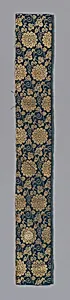
Medium
Plain compound twill silk and gilt paper; two strips to m.m.
Dimensions
12.4 × 85.7 cm (4 7/8 × 33 3/4 in.)
Classification
textile
Department
Textiles
Museum
Art Institute of Chicago
Accession Number
156108
Rights
Public Domain
Art Historical Context
This delicate textile fragment hails from Japan's late Edo period (1789–1868), dated around 1801–5, a time when the Tokugawa shogunate a vibrant culture of refinement amid isolation from the West. Measuring a slender 12.4 × 85.7 cm, it likely originated from a garment, sash, or decorative banding, showcasing the exquisite craftsmanship of urban workshops in cities like Edo (modern Tokyo) or Kyoto. Such fragments offer glimpses into everyday luxury, where textiles were prized status symbols reflecting social hierarchies and seasonal fashions. Crafted in plain compound twill silk—a sophisticated weave creating a subtle, durable texture—the piece incorporates gilt paper for shimmering accents, a technique evoking metallic threads without their weight. This combination of silk and gilded elements highlights innovative Edo-era methods to achieve opulence affordably, often seen in kimono sashes (obi) or norimono linings. The "two strips to m.m." detail suggests careful assembly, preserving its narrow, elongated form. As a preserved artifact in the Art Institute of Chicago's Textiles Department, this anonymous work underscores the artistry of Japan's pre-industrial weavers. It invites us to appreciate how everyday fabrics embodied aesthetic harmony, blending functionality with poetic elegance in a era of cultural flourishing.
About the Artist
Unknown
The artist designated as "Unknown" in our virtual museum's collection exemplifies a poignant chapter in art history: creators whose identities have faded into obscurity despite the enduring power of their work. With only one known artwork attributed to them in our holdings, this figure represents countless anonymous hands that shaped visual culture across centuries. Museums worldwide, including th...