
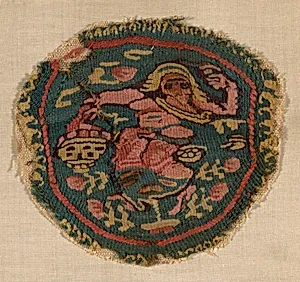
Fragment
Roman period (30 BCE– 641 CE)/Arab period (641–969), 6th/8th century
Medium
Linen and wool, tapestry weave; embroidery
Dimensions
Diam.: 11.4 cm (4 1/2 in.)
Classification
textile
Department
Textiles
Museum
Art Institute of Chicago
Accession Number
57098
Rights
Public Domain
About this artwork
This textile fragment originally adorned a garment made in Byzantine Egypt. Dyers skillfully mixed natural dyes to create a varied color palette. Since few ancient texts discuss dyeing practices, materials and techniques must be reconstructed through scientific analysis. In this example, scientists identified dyes made from indigo plants for blues and greens, weld and tannin plants for yellows, and madder plants and cochineal insects for reds and pinks.
About the Artist
Coptic
Coptic, the collective attribution for anonymous masters of early Christian Egypt, embodies the vibrant fusion of pharaonic, Hellenistic, and Greco-Roman traditions that defined art from the 4th century onward. Emerging in the context of Coptic Christianity's rise after the 1st century AD, these artists operated amid economic constraints that favored functional craftsmanship over elite patronage, ...