
Fragment
1000-1476
Medium
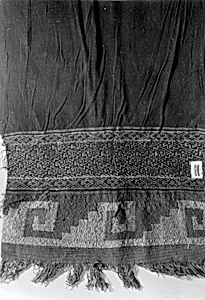
Plain brown cloth, compound border. Border put in with needle and darning stitch on plain brown cloth. Woven fringe
Dimensions
116.8 × 38.1 cm (46 × 15 in.)
Classification
textile
Department
Textiles
Museum
Art Institute of Chicago
Accession Number
85201
Rights
Public Domain
Art Historical Context
Nestled in the Textiles department of the Art Institute of Chicago, this intriguing *Fragment* (ca. 1000–1476) offers a glimpse into the world of medieval textile craftsmanship. Measuring 116.8 × 38.1 cm, it features a simple plain brown cloth foundation adorned with a compound border, meticulously applied using needle and darning stitch—a versatile technique typically associated with mending but here employed for decorative effect. The woven fringe adds a tactile, rhythmic finish, evoking the everyday artistry of an unnamed creator from a distant era. Dating to a broad span from the 11th to 15th centuries, this piece likely hails from a period of vibrant textile production across Europe, the Islamic world, or beyond, where such fragments survived from garments, furnishings, or ceremonial items. The darning stitch highlights resourceful ingenuity: threads are woven invisibly into the cloth to build intricate patterns without elaborate looms, showcasing the skill of anonymous artisans who transformed humble materials into enduring beauty. As a preserved relic, *Fragment* underscores the cultural significance of textiles as both functional objects and artistic expressions. Its survival speaks to the resilience of these crafts, inviting us to appreciate the quiet mastery behind plain brown cloth and the stories woven into its edges.
About the Artist
Unknown
The artist designated as "Unknown" in our virtual museum's collection exemplifies a poignant chapter in art history: creators whose identities have faded into obscurity despite the enduring power of their work. With only one known artwork attributed to them in our holdings, this figure represents countless anonymous hands that shaped visual culture across centuries. Museums worldwide, including th...