
Fragment
1000-1476
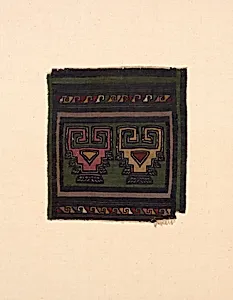
Medium
Cotton and wool (camelid), slit and single dovetailed tapestry weave with eccentric and wrapping outlining wefts
Dimensions
23.2 × 20.6 cm (9 1/8 × 8 1/8 in.)
Classification
textile
Department
Textiles
Museum
Art Institute of Chicago
Accession Number
85325
Rights
Public Domain
Art Historical Context
This exquisite textile fragment from the Lambayeque cultureca. 1000–1476), hailing from Peru's northern coast, offers a glimpse into the sophisticated artistry of a pre-Inca civilization. The Lambayeque, also known as Sicán were masterful weavers whose textiles served as symbols of status, ritual, and storytelling. Measuring just 23.2 × 20.6 cm, this small yet intricate piece survives as a testament to their enduring legacy, now housed in the Art Institute of's Textiles Department. Crafted from cotton and camelid wool using advanced slit and single dovetailed tapestry weaves, the fragment demonstrates remarkable technical prowess. Slit weave allows for bold color blocking, while dovetailed joins create seamless edges without gaps, preventing wear. Eccentric and wrapping outlining wefts add precise, raised contours to motifs, enhancing visual depth and durability—techniques that highlight the weavers' precision and innovation in a pre-industrial era. In Lambayeque society, such textiles adorned elite garments or ceremonial objects, often depicting mythical beings or nature motifs that conveyed cosmology and power. Though fragmented, this piece invites us to marvel at how ancient Andean artisans transformed humble fibers into vibrant cultural treasures, bridging millennia with their skill.