
Fragment of a Bowl
Unknown Artist
14th–15th century
Medium
Stonepaste; painted under transparent glaze
Dimensions
H. 1 5/8 in. (4.1 cm) L. 4 7/8 in. (12.4 cm) D. 3 5/8 in. (9.2 cm) Wt. 5.4 oz. (153.1 g)
Classification
Ceramics
Department
Islamic Art
Museum
Metropolitan Museum of Art, New York, NY
Credit
Rogers Fund, 1907
Accession Number
07.238.26
Rights
Public Domain
Art Historical Context
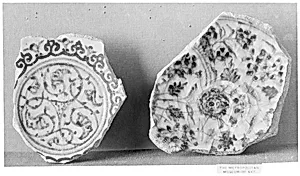
This delicate fragment of a bowl, dating to the 14th–15th century, offers a glimpse into the refined world of Islamic ceramics from the medieval Middle East. Crafted during a golden age of artistic innovation under dynasties like the Timurids or Mamluks, such vessels were everyday luxuries in households, mosques, and palaces, blending functionality with exquisite decoration. Though only a portion survives—measuring just 1⅝ inches high and weighing a mere 5.4 ounces—it evokes the sophistication of urban centers like Damascus or Tabriz, where potters pushed the boundaries of clay to rival imported Chinese porcelain. The medium, stonepaste (also known as fritware), was a remarkable Islamic invention: a composite of quartz, clay, and glass frit fired to create a white, porcelain-like body impervious to liquids. Artists painted vibrant designs under a transparent glaze before a final firing, locking in colors that gleamed with jewel-like intensity. This underglaze technique allowed for intricate motifs—perhaps floral patterns or calligraphy—symbolizing the era's fusion of artistry, science, and faith. Acquired through the Rogers Fund in 1907 and housed in the Metropolitan Museum of Art's Islamic Art Department, this shard whispers of lost treasures, reminding us how fragile beauty endures across centuries.