
Dish
Unknown Artist
second quarter 16th century
Medium
Stonepaste; painted under transparent glaze
Dimensions
H. 2 5/8 in. (6.7 cm) Diam. 15 1/8 in. (38.4 cm)
Classification
Ceramics
Department
Islamic Art
Museum
Metropolitan Museum of Art, New York, NY
Credit
Harris Brisbane Dick Fund, 1966
Accession Number
66.4.10
Rights
Public Domain
Tags
Art Historical Context
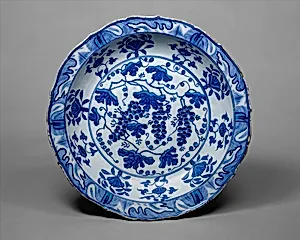
This elegant dish, crafted in the second quarter of the 16th century, exemplifies the refined ceramics of the Islamic world. Measuring 15⅛ inches in diameter and just 2⅝ inches high, it was made from stonepaste—a composite of quartz, clay, and frit—then vibrantly painted under a transparent glaze. Housed in the Metropolitan Museum of Art's Islamic Art Department, this piece was acquired through the Harris Brisbane Dick Fund in 1966. Stonepaste ware emerged in the medieval Islamic Near East as an ingenious response to the lack of true porcelain, allowing artisans to create thin, luminous bodies that rivaled Chinese imports. The underglaze painting technique, firing pigments beneath a glossy glaze, ensured durability and brilliant color retention, making such dishes prized for both daily use and display in wealthy households. Adorned with motifs of grapes and leaves, the dish evokes themes of abundance and paradise gardens central to Islamic decorative arts. These naturalistic designs, rendered with fluid grace, reflect the period's mastery of floral and fruit symbolism, celebrating nature's bounty during the height of Ottoman and Safavid ceramic innovation. A testament to anonymous craftsmanship, it invites us to savor the artistry of a vibrant cultural legacy.