
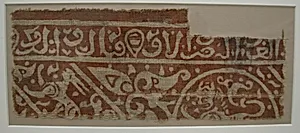
Fragment of a Calligraphic Textile
Unknown Artist
late 13th–14th century
Medium
Cotton
Dimensions
H. 4 5/8 in. (11.8 cm) W. 11 1/4 in. (28.6 cm)
Classification
Textiles-Painted and/or Printed
Department
Islamic Art
Museum
Metropolitan Museum of Art, New York, NY
Credit
Rogers Fund, 1972
Accession Number
1972.120.4
Rights
Public Domain
Art Historical Context
This delicate fragment of a calligraphic, dating to the late 13th–14th century, offers a glimpse into the refined world of Islamic art. Crafted from cotton—a practical yet luxurious medium for the era—this small piece (just 4 5/8 by 11 1/4 inches) survives as a testament to the artistry of anonymous makers in the Islamic world, where textiles adorned homes, mosques, and garments with spiritual and decorative elegance. In the Islamic tradition, calligraphy held profound cultural significance, blending sacred text with visual beauty as a primary art form, especially since figurative imagery was often avoided. This textile, classified as painted and/or printed, showcases techniques that allowed intricate Arabic script to be reproduced on fabric, possibly for tiraz bands (inscribed ceremonial cloths) or everyday luxury items. Such works highlight the technical mastery of dyers and printers during a golden age of Islamic craftsmanship, bridging the Mongol-influenced Ilkhanid and Mamluk periods. Preserved through the Rogers Fund at The Metropolitan Museum of Art since 1972, this fragment invites us to marvel at how everyday materials carried profound artistic and religious meaning, evoking the vibrant textile trade routes of medieval Eurasia.