
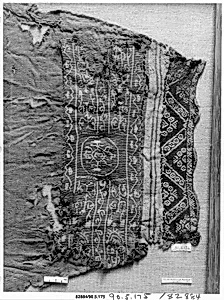
Fragment of a Sleeve
Unknown Artist
5th century
Medium
Wool, linen; plain weave, tapestry weave
Dimensions
L. 9 1/2 in. (24.2 cm) W. 13 3/8 in. (34 cm)
Classification
Textiles
Department
Islamic Art
Museum
Metropolitan Museum of Art, New York, NY
Credit
Gift of George F. Baker, 1890
Accession Number
90.5.175
Rights
Public Domain
Art Historical Context
This delicate *Fragment of a Sleeve* a rare glimpse into 5th-century textile artistry from the early Islamic world. Crafted from wool and linen, this small garment piece—measuring just 9½ by 13⅜ inches—survives as a testament to the sophisticated weaving traditions of the time. Housed in the Metropolitan Museum of Art's Islamic Department, it was generously gifted by George F. Baker in1890, preserving a fragment of everyday luxury likely worn in the bustling trade hubs of the Near East or Egypt. The artwork showcases a masterful blend of techniques: a plain weave foundation for durability, overlaid with vibrant tapestry weave for decorative motifs. Tapestry weaving, where colored weft threads create pictorial designs without floats, allowed artisans to produce intricate patterns suited for clothing. Such methods highlight the era's advanced craftsmanship, where textiles were not just functional but symbols of status and cultural exchange along Silk Road routes. Though the artist remains unknown, this sleeve fragment reveals the vibrancy of pre-Islamic and early Islamic sartorial culture, where wool and linen blends ensured comfort in diverse climates. Its survival underscores the fragility of ancient fabrics, inviting us to imagine the lives they adorned.