
Textile Fragment
Unknown Artist
3rd–4th century
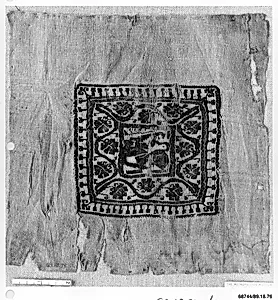
Medium
Wool, linen; plain weave, tapestry weave
Dimensions
H. 4 7/16 in. (11.2 cm) W/ 4 7/16 in. (11.2 cm)
Classification
Textiles
Department
Islamic Art
Museum
Metropolitan Museum of Art, New York, NY
Credit
Purchase by subscription, 1889
Accession Number
89.18.76
Rights
Public Domain
Art Historical Context
This delicate Textile Fragment, dating to the 3rd–4th century, a glimpse into the sophisticated textile traditions of the ancient Near East or Egypt during the Late Antique period. Crafted from and linen in a compact square measuring just 4 7/16 inches (11.2 cm) on each side, it now resides in the Metropolitan Museum Art's Department of Islamic Art, acquired through a subscription purchase in 1889 Such small survivals highlight how arid climates preserved these everyday yet artistry-rich materials for centuries. The fragment showcases a masterful blend of techniques: plain weave for its sturdy base and tapestry weave for vibrant, pictorial detailing. Tapestry weave, where colored weft threads completely cover the warp, allowed artisans to create intricate patterns without a loom's limitations—ideal for garments, hangings, or mummy wrappings. This method underscores the era's advanced dyeing and weaving skills, bridging Roman, Byzantine, and early pre-Islamic cultures. As a testament to anonymous craftsmanship, this piece reveals the cultural crossroads of trade and innovation in the ancient world, influencing later Islamic textile arts. Visitors can appreciate how such fragments illuminate daily life, spirituality, and commerce in a time of profound transition.