
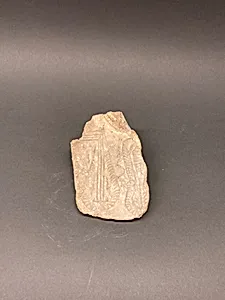
Fragment of Tombstone
Unknown Artist
9th–11th century
Medium
Limestone; carved
Dimensions
H. 5 3/8 in. (13.6 cm) W. 3 7/16 in. (8.8 cm) D. 1 in. (2.5 cm)
Classification
Stone
Department
Islamic Art
Museum
Metropolitan Museum of Art, New York, NY
Credit
Rogers Fund, 1940
Accession Number
40.170.670
Rights
Public Domain
Art Historical Context
This delicate fragment of a tombstone carved from limestone in the 9th–11th century, offers a poignant glimpse into early Islamic funerary practices. Measuring just 5 3/8 inches high and 3 7/16 inches, its modest scale belies the skilled craftsmanship required to incise enduring motifs into the durable stone. Housed in the Metropolitan Museum of Art's Department Islamic Art, it was through the Rogers Fund in 1940, preserving a piece of history from the medieval Islamic world. Tomb like this one served vital cultural roles, marking graves and often bearing inscriptions with prayers, names, or dates to honor the deceased while adhering to Islamic aniconism—avoiding figurative imagery in favor of geometric patterns or script. The carving technique, likely executed with chisels for precise relief work, highlights the stonemasons' expertise in creating legible, spiritually resonant surfaces despite the material's hardness. Dating to a formative era of Islamic expansion under the Abbasid Caliphate and regional dynasties, such artifacts reflect everyday piety and communal memory. Though incomplete, this fragment invites us to ponder the lives it once commemorated, bridging the ancient past with our curiosity today. A testament to artistry in service of faith, it underscores the Met's commitment to sharing Islamic heritage.