
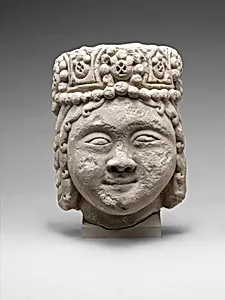
Head from a Figure with a Beaded Headdress
Unknown Artist
12th–early 13th century
Medium
Fossiliferous limestone; carved, drilled
Dimensions
H. 10 in. (25.4 cm) W. 6 1/2 in. (16.5 cm) D. 6 3/4 in. (17.1 cm)
Classification
Stone
Department
Islamic Art
Museum
Metropolitan Museum of Art, New York, NY
Credit
Rogers Fund, 1933
Accession Number
33.111
Rights
Public Domain
Tags
Art Historical Context
This striking *Head from a Figure with a Beaded He*, carved from fossiliferous limestone in the th to early 13th century exemplifies the refined stone sculpture of the medieval Islamic world. Standing just 10 inches tall, the piece captures the upper portion of a figure adorned with an elaborate beaded headdress, suggesting status or ritual significance. The use of fossiliferous limestone—a stone embedded with ancient marine fossils—adds a textured, organic quality to the, enhancing its tactile appeal museum lights. Crafted by an unknown artist, the sculpture showcases sophisticated techniques: precise carving for facial features and intricate drilling, likely for inlaying beads, eyes, or other embellishments. Such methods highlight the technical prowess of Islamic artisans during this era, when stonework often adorned architecture, tombs, or ceremonial objects despite broader aniconic traditions. Housed in the Metropolitan Museum of Art's Islamic Art department (acquired via the Rogers Fund in 1933), this fragment invites us to ponder the cultural exchanges and artistic vitality of the period, bridging pre-Islamic heritage with evolving Islamic aesthetics. A testament to enduring craftsmanship, it draws visitors into the mysteries of a lost figure's world.