
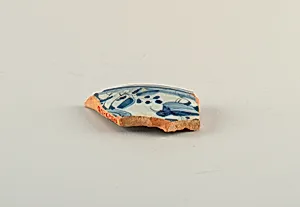
Fragment
17th century
Classification
ceramics
Department
Smithsonian Collection
Museum
Smithsonian American Art Museum
Credit
Gift of the French Government through Welles Bosworth and the French Institute
Accession Number
1935-9-5-a,b
Rights
Public Domain
About this artwork
Research in Progress
Art Historical Context
This enigmatic *Fragment* from the 17th century offers a tantalizing glimpse into the world of European ceramics during the Baroque era. Classified as ceramics and housed in the Smithsonian American Art Museum's collection, this piece—its medium yet to be precisely identified—survives as a partial artifact, hinting at the fragility and artistry of everyday or decorative objects from that time. Donated as a gift from the French Government through architect Welles Bosworth and the French Institute, it bridges French craftsmanship with American collections, underscoring international cultural exchanges in the early 20th century. The 17th century marked a golden age for ceramics in France, with innovations in faience (tin-glazed earthenware) and early porcelain experiments at workshops like those in Rouen and Nevers. Though the artist's identity remains unknown and research is ongoing, this fragment likely embodies techniques such as wheel-throwing, glazing, or intricate molding, which were hallmarks of the period's opulent aesthetic. Its presence in the Smithsonian highlights how such shards preserve stories of trade, technology, and taste, even in incomplete form. As curators continue to study it, *Fragment* invites visitors to ponder the untold narratives embedded in broken beauty—reminders that history often reveals itself piece by piece.
About the Artist
Unknown
The artist designated as "Unknown" in our virtual museum's collection exemplifies a poignant chapter in art history: creators whose identities have faded into obscurity despite the enduring power of their work. With only one known artwork attributed to them in our holdings, this figure represents countless anonymous hands that shaped visual culture across centuries. Museums worldwide, including th...