
Fragment
1850–1900
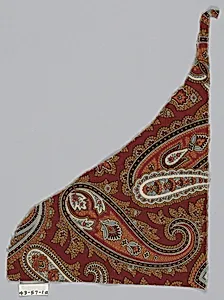
Medium
printed, dyed & painted textiles
Classification
printed, dyed & painted textiles
Department
Smithsonian Collection
Museum
Smithsonian American Art Museum
Credit
Smithsonian American Art Museum
Accession Number
1943-57-1-a
Rights
Public Domain
About this artwork
Research in Progress
Art Historical Context
This enigmatic *Fragment* from the Smithsonian Art Museum dates to the mid-to-late 19th (1850–1900), a era of American innovation in textiles during the Industrial Revolution. As a piece of printed, dyed, painted fabric, it exemplifies the era's blend of handmade artistry and emerging mechanical processes. Though the artist remains unknown and research is ongoing, such fragments often survived from quilts, garments, or home decorations, offering glimpses into everyday creativity. The medium highlights sophisticated techniques: printing for bold patterns, dyeing for rich colors (possibly using natural or synthetic anilines introduced in the 1860s), and painting for intricate details. These methods democratized beauty, making ornate textiles accessible beyond elite workshops. In American households, women frequently crafted or adapted such pieces, reflecting cultural values of thrift, self-expression, and regional styles amid rapid urbanization. Today, this fragment invites us to ponder the unsung makers behind America's textile heritage. Its preservation in the Smithsonian Collection underscores the quiet significance of domestic arts in shaping national identity—survivors of time that whisper stories yet to be fully told. (178 words)
About the Artist
Unknown
The artist designated as "Unknown" in our virtual museum's collection exemplifies a poignant chapter in art history: creators whose identities have faded into obscurity despite the enduring power of their work. With only one known artwork attributed to them in our holdings, this figure represents countless anonymous hands that shaped visual culture across centuries. Museums worldwide, including th...