
Fragment
14th–15th century
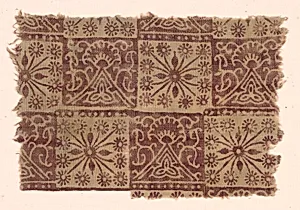
Medium
printed, dyed & painted textiles
Classification
printed, dyed & painted textiles
Department
Smithsonian Collection
Museum
Smithsonian American Art Museum
Credit
Museum purchase from Au Panier Fleuri Fund
Accession Number
1954-52-4
Rights
Public Domain
About this artwork
Research in Progress
Art Historical Context
This enigmatic *Fragment* from the th–15th centuries a tantalizing glimpse into medieval textile artistry, preserved in the Smithsonian American Art Museum's collection. Acquired through the Au Panier Fleuri Fund this small piece survives from an era when textiles were prized for both everyday use and opulent display, adorning garments, furnishings, and ecclesiastical vestments across Europe and beyond. Its unknown origins add to the mystery, as ongoing research seeks to uncover its precise cultural context. Crafted using sophisticated techniques of printing, dyeing, and painting on fabric, the fragment showcases the labor-intensive methods that defined pre-industrial textile production. Artisans likely employed wooden blocks for printing motifs, resist-dyeing to create patterns, and hand-painting for intricate details—skills that required mastery of natural pigments and mordants for colorfastness. These multi-layered processes highlight the intersection of craft and fine art, where textiles served as canvases for storytelling, symbolism, and status. Though details remain under study, this artifact underscores the enduring allure of medieval textiles: vibrant survivors of time that whisper of forgotten hands and vibrant lives. Visitors are invited to ponder its patterns as a bridge to the past.
About the Artist
Unknown
The artist designated as "Unknown" in our virtual museum's collection exemplifies a poignant chapter in art history: creators whose identities have faded into obscurity despite the enduring power of their work. With only one known artwork attributed to them in our holdings, this figure represents countless anonymous hands that shaped visual culture across centuries. Museums worldwide, including th...