
Fragment (Three Joined Strips from Small Pillow)
1550/1600
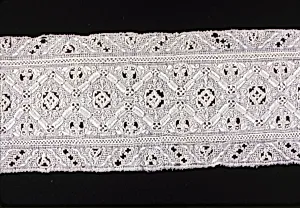
Medium
Linen, plain weave; cut and drawn work in overcast stitches with needle lace inserts; embroidered in back, buttonhole, double faggot, double hem, eyelet hem, overcast, and satin stitches
Dimensions
9.4 × 66.4 cm (3 3/4 × 26 1/8 in.)
Classification
textile
Department
Textiles
Museum
Art Institute of Chicago
Accession Number
154922
Rights
Public Domain
Art Historical Context
This delicate textile fragment, dating to around 1550–1600, consists of three joined linen strips originally from a small pillow. Measuring just 9.4 × 66.4 cm, it exemplifies the exquisite needlework of the late Renaissance, a time when finely crafted linens adorned European households, signaling refinement and wealth. Produced on a plain-weave linen base—valued for its durability and smoothness—the piece survives as a testament to anonymous artisans, likely skilled women, whose handiwork rivaled the era's finest paintings in intricacy. The artwork showcases advanced techniques like cut and drawn thread work, where threads were meticulously removed to form open patterns, secured with overcast stitches and accented by needle lace inserts. Embellishments in back, buttonhole, double faggot, double hem, eyelet hem, overcast, and satin stitches create a rhythmic interplay of solid and sheer elements, blending opacity with airy transparency. These methods demanded patience and precision, transforming everyday fabric into ornamental art. Housed in the Art Institute of Chicago's Textiles Department, this fragment highlights the cultural role of embroidery as both domestic craft and high art. Such pillows were intimate luxury items, and their rarity today underscores the ephemeral nature of textiles, offering visitors a tactile glimpse into Renaissance life.
About the Artist
Unknown
The artist designated as "Unknown" in our virtual museum's collection exemplifies a poignant chapter in art history: creators whose identities have faded into obscurity despite the enduring power of their work. With only one known artwork attributed to them in our holdings, this figure represents countless anonymous hands that shaped visual culture across centuries. Museums worldwide, including th...