
Insertion for Cover
1575/1600
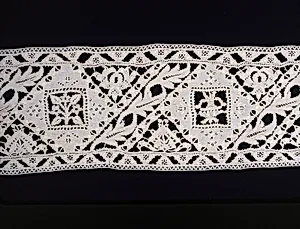
Medium
Linen, plain weave; embroidered in buttonhole, double hem, overcast back, overcast, and satin stitches; eyelet holes; cut and drawn thread work embroidered in buttonhole and hem stitches with needle lace fillings (including: buttonhole and overcast bars, some decorated with woven picots, lace filling stitches, etc., some decorated with buttonhole picots and overcast edges)
Dimensions
19.7 × 214.5 cm (7 3/4 × 84 3/8 in.); Weft repeat: H.: 42.6 cm (16 3/4 in.)
Classification
textile
Department
Textiles
Museum
Art Institute of Chicago
Accession Number
110435
Rights
Public Domain
Art Historical Context
Step into the intricate world of 16th-century needlework with *Insertion for Cover*, a stunning linen textile dated between 1575 and 1600. Crafted anonymously—likely by skilled European embroiderers during the late Renaissance—this long, narrow strip (nearly 7 feet in length) served as a decorative insertion for bedcovers, tablecloths, or garments. Its impressive weft repeat of 42.6 cm hints at a rhythmic, patterned design meant for seamless integration into larger household linens, reflecting the era's emphasis on opulent domestic furnishings among the elite. The artwork dazzles with virtuoso techniques: plain-weave linen is transformed through buttonhole, satin, and overcast stitches, alongside eyelet holes and elaborate cut-and-drawn thread work. Needle lace fillings—adorned with woven picots, buttonhole picots, and overcast bars—create delicate, lacelike voids and motifs, blending embroidery and lace-making in a labor-intensive process that could take months. These methods, popular in Italy and the Netherlands, showcased technical prowess and turned fabric into fine art. Held in the Art Institute of Chicago's Textiles Department, this piece illuminates the cultural role of embroidery as a feminine craft elevated to high status. It whispers of Renaissance leisure, piety, and prosperity, where such embellishments adorned homes as symbols of refinement and devotion. A testament to unseen hands, it invites us to marvel at the patience behind every precise stitch.
About the Artist
Unknown
The artist designated as "Unknown" in our virtual museum's collection exemplifies a poignant chapter in art history: creators whose identities have faded into obscurity despite the enduring power of their work. With only one known artwork attributed to them in our holdings, this figure represents countless anonymous hands that shaped visual culture across centuries. Museums worldwide, including th...