
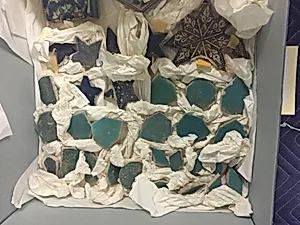
Fragments of a Tile Panel
Unknown Artist
late 13th–first half 14th century
Medium
Polychrome-glazed cut tiles
Classification
Ceramics-Tiles
Department
Islamic Art
Museum
Metropolitan Museum of Art, New York, NY
Credit
Fletcher Fund, 1975
Accession Number
1975.350.3
Rights
Public Domain
Art Historical Context
### Fragments of a Tile Panel the late 13th the first half of the14th century, this *Fragments of a Tile Panel exemplifies the pinnacle of medieval Islamic ceramic artistry. Crafted by an unknown artist, theserome-glazed cut tiles adorned grand architectural spaces, such as mosques or palaces, in the Islamic world. During this era, marked by the flourishing of dynasties like the Ilkhanids and early Mamluks, tiles buildings into shimmering jewels, reflecting sunlight in vibrant blues, turquoise, whites, and golds. The cut-tile technique—where shapes are precisely sliced from fired clay slabs before glazing and refiring—allowed for intricate mosaic patterns of geometric stars, arabesques, and floral motifs. This labor-intensive method, prized for its precision and durability, avoided figurative imagery in line with Islamic aniconism, instead celebrating mathematical harmony and infinite repetition. The surviving fragments hint at the opulence of complete panels, which could span entire walls or mihrabs. Housed in the Metropolitan Museum of Art's Islamic Art Department (acquired via the Fletcher Fund in 1975), these tiles offer a tangible link to a golden age of craftsmanship. They remind us how everyday materials became vehicles for spiritual beauty, inviting visitors to imagine the lively bazaars and prayer halls of long ago.