
Funerary Equipment, Tomb of Userhat
1911; original ca. 1294–1279 B.C.
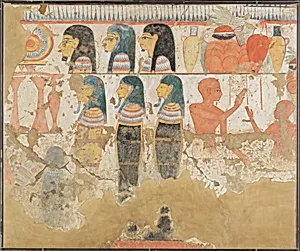
Medium
Tempera on paper
Dimensions
Facsimile H. 64 cm (25 3/16 in); w. 75 cm (29 1/2 in) scale 1:1 Framed H. 64.1 cm (25 1/4 in); w. 76.2 cm (30 in)
Classification
Facsimile, Userhat (TT 51), funerary equipment
Period
Twentieth Century; original New Kingdom, Ramesside
Department
Egyptian Art
Museum
Metropolitan Museum of Art, New York, NY
Credit
Rogers Fund, 1915
Accession Number
15.5.17b
Rights
Public Domain
Tags
Art Historical Context
Welcome to the Egyptian Art galleries at the Metropolitan Museum of Art where we encounter a vivid bridge between ancient Egypt and the modern world: *Funerary Equipment, Tomb ofhat*. This striking facsimile, created in 1911 by the renowned Egyptologist Norman de Garis, meticulously reproduces scenes from the New Kingdom tomb of Userhat, dating to around 1294–1279 B.C. during Dynasty 19, the Ramesside period. At a precise 1:1 scale (64 x 75 cm), rendered in tempera on paper, it captures the opulent funerary preparations of an elite official's afterlife journey. Davies, a pioneering copyist of Theban tombs, worked with his wife Nina to document fragile wall paintings threatened by time and tomb robbers. Acquired through the Rogers Fund in 1915, this piece preserves the original's vibrant colors and intricate details—likely depicting men and women in ritual scenes of offerings, daily life, or processions essential for the ka (spirit) in the afterlife. Such tomb art embodied Egyptian beliefs in eternity, blending artistry with magic to sustain the deceased amid the grandeur of pharaohs like Ramesses II. Today, it invites us to marvel at ancient ingenuity: tempera techniques echoing Egypt's own pigments, now safeguarding cultural heritage for all. A testament to both antiquity and scholarship!
About the Artist
Norman de Garis Davies · 1865–1941
Norman de Garis Davies (1865–1941) was a British Egyptologist and archaeological artist whose meticulous copies of ancient Egyptian tomb paintings constitute one of the most important records of pharaonic art ever made. Born in Ashton-under-Lyne, Lancashire, he originally trained for the ministry before being drawn into Egyptology through his involvement with the Egypt Exploration Fund in the 1890...