
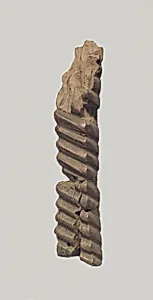
Furniture element
Unknown Artist
ca. 18th century BCE
Medium
Ivory
Dimensions
3.41 x 0.88 in. (8.66 x 2.24 cm)
Classification
Ivory/Bone-Sculpture
Culture & Period
Old Assyrian Trading Colony · Middle Bronze Age–Old Assyrian Trading Colony
Department
Ancient Near Eastern Art
Museum
Metropolitan Museum of Art, New York, NY
Credit
Gift of Mrs. George D. Pratt, in memory of George D. Pratt, 1936
Accession Number
36.70.10
Rights
Public Domain
Art Historical Context
This delicate ivory furniture element, dating to around the 18th century, hails from the Old Assyrian Trading Colony—a vibrant network of Mesopotamian merchant outposts in ancient Anatolia (modern-day Turkey). During the Middle Bronze Age, Assyrians established bustling trade hubs like Kanesh, exchanging textiles, tin, and luxury goods across vast distances. Small carvings like this one, measuring just 3.41 x 0.88 inches, were prized inlays or appliqués for elite furniture, showcasing the era's far-reaching commerce and appreciation for exotic materials. Crafted from elephant ivory—a rare import symbolizing wealth and status— this sculpture exemplifies the exquisite carving techniques of Near Eastern artisans. Intricately worked by hand, such pieces often featured stylized motifs reflecting cultural exchanges between Mesopotamia, Anatolia, and beyond. Though the exact form is modest, its survival speaks to the durability of ivory and the sophistication of Bronze Age workshops. Today, this gift to the Metropolitan Museum of Art offers a tangible glimpse into the daily lives of ancient traders, reminding us how art bridged empires long before modern globalization. A testament to forgotten hands, it invites us to ponder the opulent interiors of Assyrian merchants' homes.