
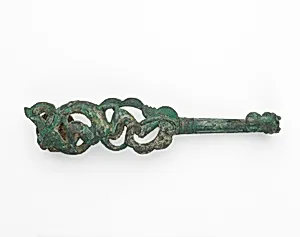
Garment hook (<em>daigou</em>), fragment
475 BCE-220 CE
Classification
Jewelry and Ornament
Department
Smithsonian Collection
Museum
Smithsonian American Art Museum
Credit
Gift of Charles Lang Freer
Accession Number
F1917.257
Rights
Public Domain
Tags
About this artwork
To 1917
Art Historical Context
This exquisite fragment of a *daigou*—a traditional Chinese garment hook used to fasten robes—offers a glimpse into the refined artistry of ancient China during the Warring States period475–221 BCE) Han dynasty (206 BCE– CE). These hooks were both functional and decorative, symbolizing status among the elite. Crafted as a zoomorphic form, likely depicting an animal, it reflects the era's fascination with mythical creatures and nature, blending utility with spiritual symbolism in everyday adornment. Forged in bronze through sophisticated lost-wax casting techniques, the piece features gilding that would have lent it a luxurious golden sheen, highlighting the advanced metalworking skills of Chinese artisans. Such ornaments were status symbols, often buried in tombs to accompany the deceased into the afterlife, underscoring beliefs in continuity between worlds. This fragment, part of the renowned Charles Lang Freer collection gifted to the Smithsonian American Art Museum by 1917, exemplifies the collector's passion for Asian antiquities and preserves a tangible link to China's Bronze Age innovations. (178 words)
About the Artist
Unknown
The artist designated as "Unknown" in our virtual museum's collection exemplifies a poignant chapter in art history: creators whose identities have faded into obscurity despite the enduring power of their work. With only one known artwork attributed to them in our holdings, this figure represents countless anonymous hands that shaped visual culture across centuries. Museums worldwide, including th...