
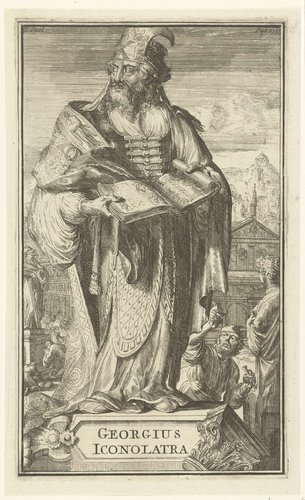
Georgius Iconolatra
1701
Medium
etching
Dimensions
157; 267
Rights
Public Domain
About this artwork
height 267 mm x width 157 mm
Art Historical Context
**Georgius Iconolat** is a striking etching by Romeyn de Hooghe, a prolific Dutch artist and master printmaker active during the late Baroque period. Created in 170, this intimate work measures 267 mm in height by 157 mm in width making it ideally suited for collectors and dissemination as a printed satire. De Hooghe, renowned for his intricate line work and politically charged imagery, often employed etching—a technique using acid to bite designs into metal plates—to produce detailed, reproducible images that captured the era's tensions. The title, translating from Latin as "George the Icon-Worshiper," hints at a pointed critique, likely targeting religious practices amid the Protestant-Catholic divides in early 18th-century Europe. De Hooghe's etchings frequently blended sharp social commentary with virtuoso draftsmanship, reflecting the Dutch Republic's vibrant tradition of satirical prints during the lingering Dutch Golden Age. This piece exemplifies his skill in conveying narrative through expressive lines and tonal contrasts, inviting viewers to ponder its historical bite. As a window into 1701's cultural debates, **Georgius Iconolatra** showcases etching's power for both artistry and propaganda, preserving de Hooghe's legacy as a bridge between illustration and fine art.
About the Artist
Romeyn de Hooghe · 1645–1708
Romeyn de Hooghe (1645-1708) was a Dutch Baroque engraver, draughtsman, and political satirist who became the most prolific and versatile graphic artist of the Dutch Republic in the late seventeenth century. Born in Amsterdam, he rose to become one of early modern Europe's most important printmakers and a pioneering master of political satire. De Hooghe's significance extends far beyond his techn...