
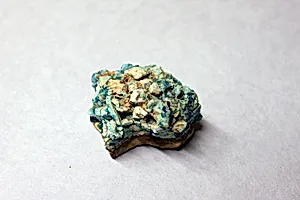
Glaze Clump
Unknown Artist
11th–12th century
Medium
Fragments of quartz, traces of copper glaze, liquified, and adhered pieces of earthenware
Dimensions
H. 2 5/16 in. (5.8 cm) W. 2 9/16 in. (6.5 cm) D. 1 3/16 in. (3 cm) 48.101.54: 1 5/8 in. (4.1 cm) 1 1/8 in. (2.9 cm) 1 1/8 in. (2.9 cm)
Classification
Ceramics
Department
Islamic Art
Museum
Metropolitan Museum of Art, New York, NY
Credit
Rogers Fund, 1948
Accession Number
48.101.53
Rights
Public Domain
Art Historical Context
Nestled in the Islamic Art collection at The Metropolitan Museum of Art, *Glaze Clump* (11th–12th century) offers a rare glimpse into the experimental world of medieval ceramic production. This small artifact, acquired through the Rogers Fund in 1948, measures just a few inches across and consists of fused fragments—quartz pieces, traces of vibrant copper glaze, and liquified earthenware. Far from a finished vessel, it captures a moment of transformation, likely born from the intense heat of a kiln where glazes melted and adhered in unexpected ways. In the golden age of Islamic ceramics, artisans mastered sophisticated glazing techniques, using minerals like copper to create shimmering turquoise hues on pottery and tiles. This clump exemplifies the technical prowess of the era: quartz for frit bodies that vitrified under fire, and copper oxides that fluxed into glassy pools at temperatures exceeding 1,000°C. Such mishaps or byproducts reveal the trial-and-error innovation behind grand architectural decorations in mosques and palaces across the Abbasid or Fatimid realms. Though humble in scale, *Glaze Clump* (acc. no. 48.101.54) underscores the artistry of anonymity in Islamic crafts, where material alchemy drove cultural splendor. Visitors can ponder how these tiny remnants fueled an enduring legacy of luminous ceramics.