
Wasters
Unknown Artist
11th–12th century
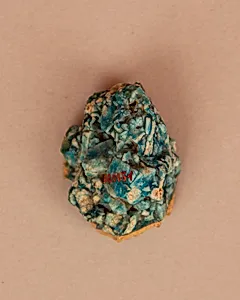
Medium
Glazes
Dimensions
H. 1 5/8 in. (4.1 cm) W. 1 1/8 in. (2.9 cm) D. 1 1/8 in. (2.9 cm)
Classification
Ceramics
Department
Islamic Art
Museum
Metropolitan Museum of Art, New York, NY
Credit
Rogers Fund, 1948
Accession Number
48.101.54
Rights
Public Domain
Art Historical Context
Nestled in the Islamic Art at The Metropolitan Museum of Art,Wasters* is autive ceramic artifact from the 11th12th century, measuring just 1 5/8 inches high. Crafted by an unknown artist, this piece exemplifies the experimental spirit of medieval Islamic pottery workshops, likely originating from regions like Iran or Syria where glazed ceramics flourished under the Seljuk dynasty. In ceramics production, "wasters were flawed items discarded during firing—often test pieces for perfecting glazes. Here, the medium of glazes highlights innovative techniques: vibrant, translucent layers applied over earthenware bodies, achieving lustrous turquoise, cobalt blues, or manganese purples that defined Islamic artistry. These methods, influenced by earlier Chinese and Abbasid traditions, revolutionized decorative wares, from tiles adorning mosques to elegant vessels for daily life. Though imperfect, *Wasters* offers a rare glimpse into the artisan's trial-and-error process, underscoring the cultural prestige of ceramics in Islamic society. Acquired through the Rogers Fund in 1948, it reminds us how even discards preserve the ingenuity of a golden age of craftsmanship.