
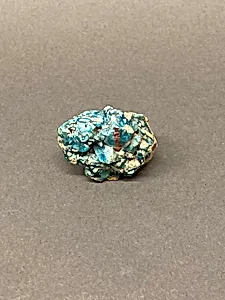
Fragment of a Waster
Unknown Artist
11th–12th century
Medium
Earthenware; white body, glazed
Dimensions
H. 2 3/4 in. (7 cm) W. 3 3/16 in. (8.1 cm)
Classification
Ceramics
Department
Islamic Art
Museum
Metropolitan Museum of Art, New York, NY
Credit
Rogers Fund, 1948
Accession Number
48.101.34
Rights
Public Domain
Art Historical Context
This delicate fragment, titled *Fragment of a Waster hails from the Islamic world of the 11th–12th century, golden age for ceramic innovation. Crafted from earthenware with a distinctive white body and glossy glaze, it measures just 2¾ inches high and over 3 inches wide—small enough to fit in the palm of your hand. through the Rogers Fund in 1948, it resides in the Metropolitan Museum of's Department of Islamic Art, offering a glimpse into medieval pottery workshops. A "waster refers to a flawed piece discarded during production, often due to cracks, warping, or glazing mishaps. Potters in this era fired these rejects in waster heaps, where fragments like this survived for centuries. The white-bodied earthenware, coated in a lead or tin glaze, was a clever technique to create an opaque, porcelain-like surface—long before true porcelain reached the West. This innovation allowed for vibrant painted decorations, though our fragment preserves the pure elegance of the material itself. Though incomplete, this artifact whispers of bustling kilns in regions like Iraq, Iran, or Syria, where artisans pushed ceramic boundaries. It reminds us that even "failures" hold artistic value, revealing the trial-and-error heart of Islamic craft traditions that influenced global ceramics for generations.