
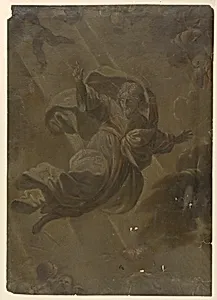
God the Father
1700–50
Classification
religion
Department
Smithsonian Collection
Museum
Smithsonian American Art Museum
Credit
Gift of Mrs. Grafton H. Pyne
Accession Number
1948-118-68
Rights
Public Domain
About this artwork
Research in Progress
Art Historical Context
"God the Father," created between 1700 and 1750 by an unknown artist, offers a glimpse into early American religious devotion. Housed in the Smithsonian American Art Museum part of the Smithsonian Collection this classified religious artwork was generously gifted by Mrs. Grafton H. Pyne. Dating to the colonial era, it a time when faith played a central role in daily life amid the challenges of settlement and the stirrings of religious revivals like the Great AwakeningThough the medium remains unidentified amid ongoing research, such pieces from this period often employed accessible materials like oil on canvas, wood carvings, or textiles, serving as personal or communal aids to worship. Depictions of God the Father were poignant symbols of divine authority and protection in Protestant-dominated America, where visual representations of the divine were both reverent and restrained due to traditions wary of idolatry. This enigmatic work invites us to ponder the spiritual worldviews of 18th-century Americans. As curators continue their research, it stands as a testament to the enduring mystery and cultural depth of early American art, reminding visitors of how faith inspired creativity in the New World.
About the Artist
Unknown
The artist designated as "Unknown" in our virtual museum's collection exemplifies a poignant chapter in art history: creators whose identities have faded into obscurity despite the enduring power of their work. With only one known artwork attributed to them in our holdings, this figure represents countless anonymous hands that shaped visual culture across centuries. Museums worldwide, including th...