
Gold Belt-Hole Guard
Unknown Artist
700s
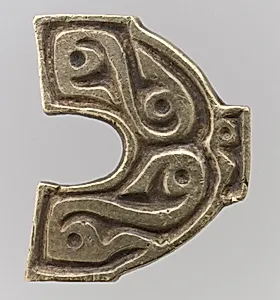
Medium
Gold
Dimensions
1 × 7/8 × 1/4 in., 0.45 Troy Ounces (2.5 × 2.2 × 0.7 cm, 14g)
Classification
Metalwork-Gold
Culture
Avar
Department
Medieval Art
Museum
Metropolitan Museum of Art, New York, NY
Credit
Gift of J. Pierpont Morgan, 1917
Accession Number
17.190.1679
Rights
Public Domain
Art Historical Context
Nestled in the Metropolitan Museum of Art's Medieval collection, this exquisite *Gold Belt-Hole Guard from the 700s exemplifies the masterful metalwork of the Avar. Crafted from pure gold and weighing just 0.45 Troy ounces (14 grams), this diminutive piece—measuring a mere 1 × 7/8 × 1/4 inches (2.5 × 2.2 × 0.7 cm)—served a practical yet prestigious function. It protected and adorned the hole in a leather belt where the buckle prong would insert, a common accessory among nomadic warriors and elites of the Avar Khaganate, who dominated the Eurasian steppes and Carpathian Basin from the 6th to 9th centuries. The Avars, a confederation of Turkic and Iranian nomadic peoples, were renowned for their equestrian prowess and intricate goldsmithing, often drawing from Byzantine and steppe traditions. Such small-scale gold fittings highlight their sophisticated techniques, likely involving hammering, cutting, and polishing to achieve a lustrous finish on such a tiny scale. These objects were status symbols, adorning the belts that held swords and quivers, reflecting the wearer's wealth and rank in a mobile, hierarchical society. A generous gift from J. Pierpont Morgan in 1917, this artifact offers a glimpse into early medieval Europe's dynamic cultural exchanges. Though created by an unknown artisan, its survival underscores the enduring allure of Avar craftsmanship, bridging the worlds of nomads and settled empires.