
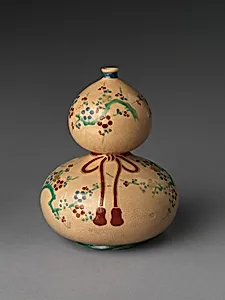
Gourd-Shaped Sake Bottle (Tokkuri)
Unknown Artist
ca. 1700–1730
Medium
Stoneware (Ko-Kiyomizu ware)
Dimensions
H. 9 in. (22.9 cm); W. 7 in. (17.8 cm)
Classification
Ceramics
Culture & Period
Japan · Edo period (1615–1868)
Department
Asian Art
Museum
Metropolitan Museum of Art, New York, NY
Credit
Gift of Florence and Herbert Irving, 2015
Accession Number
2015.500.9.22
Rights
Public Domain
Art Historical Context
This delightful gourd-shaped sake bottle, known as a *tokkuri*, hails from Japan's Edo period (16151868), around 1700–1730. at 9 inches tall and 7 inches wide it was designed for serving warm sake during intimate gatherings or festive meals, its ergonomic, bulbous form making it easy to pour from while evoking the humble gourd—a symbol of abundance in Japanese culture. Crafted by an unknown artisan, such vessels brought everyday elegance to the rising merchant class amid Japan's urban prosperity. Made of stoneware in the Ko-Kiyomizu style from Kyoto's Kiyomizu district, this piece exemplifies early 18th-century ceramic innovation. Ko-Kiyomizu ware is prized for its rustic texture and natural ash glazes formed during wood-firing in the kiln, creating subtle earthy tones without applied decoration. This technique drew inspiration from Chinese prototypes but developed a distinctly Japanese sensibility, blending functionality with understated beauty. Today, this tokkuri graces the Metropolitan Museum of Art's Asian Art collection, a generous gift from Florence and Herbert Irving in 2015. It offers a window into Edo Japan's refined domestic arts, where ceramics like this bridged utility and artistry in daily life.