
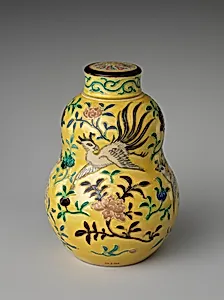
Sencha Tea Jar with Phoenixes and Peonies in the Cochin (Kōchi) Style
1790
Medium
Paste decorated with polychrome and transparent enamels (Kyoto ware)
Dimensions
H. 5 3/4 in. (14.6 cm); Diam. 4 in. (10.2 cm); Diam. of rim 1 1/4 in. (3.2 cm); Diam. of base 2 1/2 in. (6.4 cm)
Classification
Ceramics
Culture & Period
Japan · Edo period (1615–1868)
Department
Asian Art
Museum
Metropolitan Museum of Art, New York, NY
Credit
Gift of Charles Stewart Smith, 1893
Accession Number
93.3.159a, b
Rights
Public Domain
Tags
Art Historical Context
This exquisite sencha tea jar, crafted by Eiraku Hozen in 1790 during Japan's Edo period (1615–1868), exemplifies the refined artistry of Kyoto ware. Eiraku Hozen, a master potter from the esteemed Eiraku family, specialized in innovative enameling techniques. The jar, measuring just 5 3/4 inches tall, was designed to store sencha—a vibrant green tea that gained immense popularity in the late 18th century among Japan's urban elite, marking a shift from traditional matcha ceremonies to more casual brewing rituals. Adorned with phoenixes and peonies in the Cochin (Kōchi) style, the jar features paste decoration enhanced by polychrome and transparent enamels, creating a luminous, jewel-like effect. Phoenixes, symbols of renewal and imperial grace, soar amid lush peony blooms and foliage, evoking abundance and harmony—auspicious motifs rooted in Chinese influences adapted by Japanese artisans. This overglaze enameling technique allowed for intricate, colorful designs fired at lower temperatures, distinguishing Kyoto ware from bolder porcelains. A gift to the Metropolitan Museum of Art in 1893, this piece highlights the Edo era's fusion of everyday utility and aesthetic splendor, inviting visitors to appreciate how tea culture bridged domestic life and artistic innovation in historic Japan.
About the Artist
Eiraku Hozen · 1795–1854
Eiraku Hozen (1795–1854) was a celebrated Japanese ceramic artist and the sixteenth-generation head of the Nishimura family, a Kyoto dynasty of potters whose work was closely associated with the tastes of the imperial court and the refined aesthetic culture of the ancient capital. Operating under the artistic name Eiraku — a name that would become synonymous with a particular style of elegant, tec...