
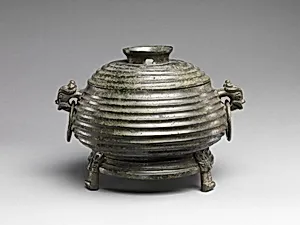
西周 青銅簋|Grain serving vessel (gui)
Unknown Artist
early 9th century BCE
Medium
Bronze
Dimensions
H. 9 in. (22.9 cm); W. 13 in. (33 cm)
Classification
Metalwork
Culture & Period
China · Western Zhou dynasty (1046–771 B.C.)
Department
Asian Art
Museum
Metropolitan Museum of Art, New York, NY
Credit
Charlotte C. and John C. Weber Collection, Gift of Charlotte C. and John C. Weber through the Live Oak Foundation, 1988
Accession Number
1988.20.3a, b
Rights
Public Domain
Art Historical Context
This elegant bronze *gui* vessel, dating to the early 9th century BCE during China's Western Zhou dynasty (104–771 BCE), served as a ritual container for offering grains to ancestors. Standing just 9 inches tall and 13 inches wide, compact form exemplifies the refined metalwork of the period, crafted using the sophisticated piece-mold casting technique that allowed for intricate designs and precise shapes. Such vessels were essential in aristocratic ceremonies, symbolizing the elite's connection to divine forces and familial lineage. Bronze *gui* like this one highlight the Western Zhou's artistic and technological pinnacle, where metalwork evolved from Shang dynasty precedents into more standardized, elegant forms. Often inscribed with dedications or genealogies—though specifics for this piece are not noted—these objects underscored social hierarchy and Confucian ideals of filial piety that would shape later Chinese culture. Its presence in the Metropolitan Museum of Art's Asian Art collection, gifted by Charlotte C. and John C. Weber in 1988, invites us to ponder the enduring legacy of ancient rituals in everyday reverence.